Spinning Envy: How Vinyl's Big Comeback Is Pushing CD Packaging Into Uncharted Territory
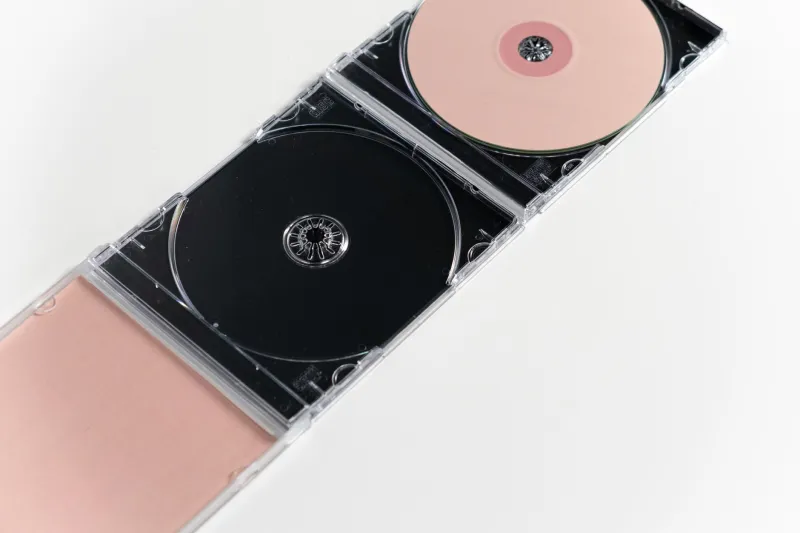
There's a moment that a lot of CD collectors know well. You're at a record store—maybe a Amoeba in LA, maybe a local shop in Columbus or Nashville—and someone next to you unfolds a gatefold LP sleeve like they're opening a small piece of architecture. The artwork spreads out across both hands. The liner notes breathe. The whole thing feels, honestly, kind of unfair.
Vinyl won the optics war. And CD designers have spent the better part of a decade figuring out what to do about it.
The Gatefold Effect
When vinyl started climbing back from the dead in the early 2010s, most people assumed it was nostalgia doing the heavy lifting. And sure, nostalgia was part of it. But something else happened alongside the format's resurrection: packaging design got treated seriously again. Labels started investing real money into gatefold sleeves, printed inner bags, heavyweight inserts, and tip-on jackets. The physical object became an argument for itself.
For CD collectors and the designers who work in that format, watching all of this unfold carried a particular sting. CDs had spent years getting squeezed into jewel cases and digipaks that prioritized shelf space over storytelling. The format's roughly five-by-five-inch canvas was always going to be a tougher sell than a twelve-inch square. But the vinyl revival made that gap feel wider than ever.
"You can't pretend the scale difference doesn't matter," says one packaging designer who has worked with indie labels on both formats. "When a gatefold opens up, you've got almost two square feet of real estate. A standard jewel case gives you maybe twenty-five square inches on the front panel. Those are completely different conversations."
Small Format, Big Ambitions
Here's where it gets interesting, though. Rather than ceding the aesthetic ground entirely, a growing number of designers and labels have started treating the CD's physical limitations as a design problem worth solving—not a losing battle worth abandoning.
Some of the most compelling CD packaging work happening right now leans hard into structural invention. Accordion-fold booklets that expand to poster size. Chipboard slipcases with debossed artwork that rewards close inspection. Digipaks with multiple panels that unfold into something closer to a small exhibition than a music package. A handful of boutique labels have gone even further, commissioning custom die-cut trays, translucent cases, and hand-numbered inserts that make each copy feel genuinely singular.
The Japanese market has been doing this for years—their CD releases have long been known for elaborate packaging that treats the format with a reverence rarely seen stateside. But that sensibility is starting to cross the Pacific, driven partly by collector demand and partly by designers who are tired of the format being dismissed.
"There's actually something freeing about the constraint," says another designer who specializes in packaging for reissue labels. "Vinyl has this expectation now. Everyone knows what a great gatefold looks like. With CD, you can genuinely surprise people because the bar for what the format can do hasn't been fully set."
What Collectors Are Actually Buying
Spend any time on discogs, in collector forums, or at a decent record fair and you'll notice that the most sought-after CD releases aren't always the ones with the biggest names attached. They're often the ones where someone clearly cared about the object itself.
Limited edition CD box sets from artists like Radiohead, Sigur Rós, and various metal labels have fetched serious money precisely because the packaging treated the disc as one component of a larger artifact. Hardcover book editions, archival photo prints, and folded reproduction artwork have all shown up inside CD packages that cost more to produce than most vinyl pressings.
That market signal hasn't gone unnoticed. More labels—including some that had largely written off the format—are now experimenting with tiered CD releases. A standard jewel case version for streaming converts who want something physical, and a deluxe edition with expanded packaging for the collectors who are going to sit with the thing for years.
The Vinyl Envy Feedback Loop
There's a feedback loop at work here that's worth naming. Vinyl's resurgence raised collector expectations for physical music overall. Those elevated expectations pushed some CD buyers to demand more from the format. That demand gave designers permission—and sometimes budget—to experiment. And the results of that experimentation are slowly reshaping what people think a CD can actually be.
It doesn't mean CDs are winning the format wars. They're not. Streaming is still the dominant delivery mechanism for most music, vinyl has the cultural cachet, and CDs occupy an awkward middle position that's part nostalgia, part audiophile utility, part collector object. But within that awkward position, something genuinely creative is happening.
The designers who are most excited about this moment tend to share a common perspective: they're not trying to out-vinyl vinyl. They're trying to figure out what a CD can do that nothing else can. A gatefold LP is always going to win on sheer visual scale. But a well-designed CD package can do things with layering, sequencing, and tactile detail that the larger format actually makes harder.
Where This Goes Next
The most optimistic version of this story ends with the CD carving out a distinct design identity—not as vinyl's smaller, less glamorous cousin, but as a format with its own visual language and collector logic. Some of the work being produced right now suggests that's not entirely wishful thinking.
The more realistic version is that great CD packaging remains a niche pursuit, valued intensely by a relatively small community while most of the music world moves on. Which is, honestly, fine. Collector culture has never been about mass market validation. It's about the people who care enough to notice.
And right now, the people who care about CD packaging are producing some of the most inventive physical music objects this country has seen in a long time. Vinyl might have the gatefold. But the CD isn't done making its case.