The Cardboard Graveyard: How CD Packaging Lost Its Soul and What Collectors Are Left Holding
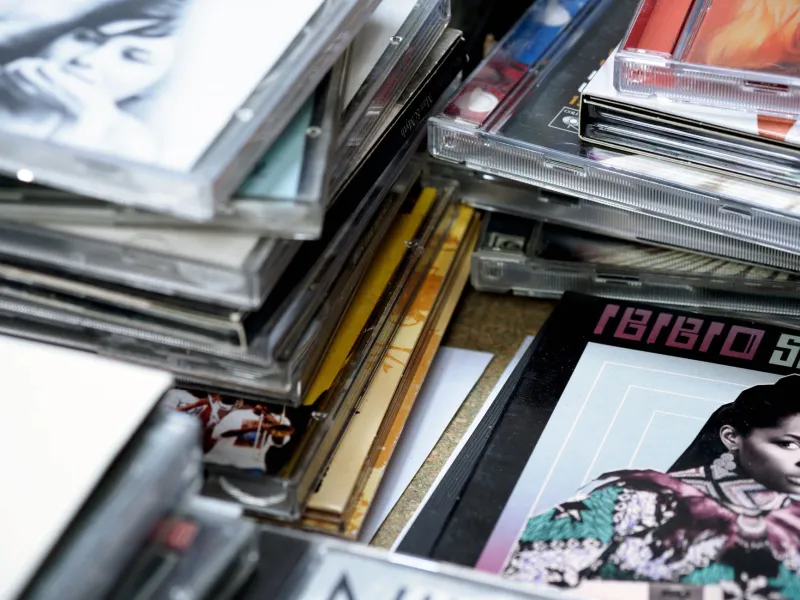
There's a specific kind of grief that hits when you crack open a CD from 1994 versus one from 2019. The older disc comes loaded — a thick booklet folded into accordion panels, embossed lettering you can feel under your thumb, maybe a translucent tray card with a second image hiding underneath. The newer one? A single sheet of paper folded in half, printed on what feels like copy paper, tucked behind a jewel case that cracks if you look at it wrong.
Something got lost in between. And collectors know exactly when it happened.
The Golden Era Nobody Officially Named
From roughly the mid-1980s through the early 2000s, CD packaging was quietly going through one of the most creative periods in commercial design history. Labels were still flush, physical sales were the only game in town, and designers had real budgets. The result was a wave of packaging that pushed against every constraint the format imposed.
There were digipaks with soft-touch matte finishes that felt almost like fabric. There were multi-panel gatefold cases that unfolded into mini posters. Radiohead's Kid A shipped with a booklet stuffed with abstract imagery that functioned more like an art zine than a liner note insert. Nine Inch Nails releases came with packaging so elaborate that fans collected different pressings just to compare the variations. Björk's Homogenic arrived in a jewel case with a diecut window that revealed a second layer underneath.
These weren't accidents. They were the product of art directors who understood that the physical object was part of the music's identity — that the thing you held in your hands before you even hit play was doing emotional work.
"The packaging was the first handshake between the artist and the listener," says one longtime album art director who has worked with major labels since the early nineties. "You had maybe thirty seconds before someone decided whether to pick it up off the rack. Every texture, every font choice, every fold — it all had to earn its keep."
Where the Budget Went
The collapse wasn't sudden. It was a slow bleed that started when Napster hit and accelerated every year after. As digital downloads ate into physical sales, labels started trimming packaging budgets the way airlines started charging for checked bags — quietly, incrementally, hoping nobody would make a scene.
By the mid-2000s, elaborate packaging was becoming a luxury reserved for deluxe editions and box sets aimed at hardcore fans willing to pay a premium. Standard releases got the bare minimum. Then streaming arrived and finished the job. When the primary delivery mechanism for music is a thumbnail on a phone screen, the argument for investing in physical packaging design becomes almost impossible to make in a budget meeting.
"You're not designing for the shelf anymore," says a graphic designer who has worked on packaging for indie and major label releases over the past fifteen years. "You're designing a 3000-pixel square that has to read on a phone screen at two inches wide. Everything else is secondary. The physical object, if there even is one, is almost an afterthought."
The numbers back this up. Streaming now accounts for the overwhelming majority of recorded music revenue in the United States. CD sales, while experiencing a modest uptick in recent years, remain a fraction of their peak. Labels have little financial incentive to pour money into packaging that most buyers will never see.
What Collectors Are Actually Losing
Walk into any serious collector's space and you'll find the good stuff — the releases from the era when packaging still meant something. Sealed copies of elaborate digipaks. Japanese pressings with obi strips and expanded booklets. Special editions with lenticular covers that shift when you tilt them.
These objects have become genuinely rare in a way that wasn't anticipated when they were made. Most people threw their CD cases away. Kids scratched the discs and lost the booklets. The surviving copies in excellent condition are increasingly scarce, which is part of why prices for certain releases have climbed steadily over the past decade.
But beyond the financial angle, collectors will tell you there's something irreplaceable about what that packaging represented. Hidden lyrics printed in the gutter margin of a booklet. Thank-you lists that read like a portrait of a whole community. Photographs that didn't make the album art but told the story of who these people were at that moment in time.
"I've spent hours with some of these booklets," says one collector based in Chicago who has been building a collection of elaborate CD packaging for over twenty years. "There's a Smashing Pumpkins pressing I have where the booklet is basically a scrapbook. Notes, drawings, photographs — stuff you'd never find anywhere else. That's primary source material. That's history."
Vinyl's Return Isn't the Answer You Think
The obvious counterargument is vinyl. Record sales have been climbing for years, and the LP format brings back the large-format cover art and gatefold sleeves that CD packaging was always trying to approximate on a smaller scale. Doesn't vinyl's resurgence prove that consumers still want physical objects with design integrity?
Maybe. But it doesn't help CDs.
The vinyl revival has, if anything, reinforced the CD's status as the forgotten middle child of physical formats. Audiophiles who want a premium physical experience are buying records. Casual listeners are streaming. CDs occupy an increasingly awkward position — too small for the large-format design that makes vinyl compelling, too physical for the convenience that makes streaming dominant.
Some smaller labels and artists are still doing interesting work with CD packaging — hand-numbered editions, screen-printed cases, inserts printed on unusual materials. But these are niche efforts aimed at existing fans who already understand the value proposition. They're not moving the broader culture.
Is There a Way Back?
Honestly? Probably not in any mainstream sense. The economics don't support it, and the cultural moment has passed. But that doesn't mean the art form is entirely dead — it just means it's moved into different hands.
Collectors, archivists, and the small community of designers who still care about this stuff are the ones keeping the tradition alive. They're the ones paying attention to which pressings had the better booklets, which labels still invest in tactile design, which artists treat their packaging as an extension of the work rather than a box-checking exercise.
That's actually not so different from how a lot of art forms survive. They stop being mainstream and become the obsession of a devoted few who understand what's at stake. The cardboard might be getting thinner, but the people holding onto it are holding tighter than ever.