Touch, Smell, Collect: The Wild Era When CD Packaging Tried to Blow Your Mind
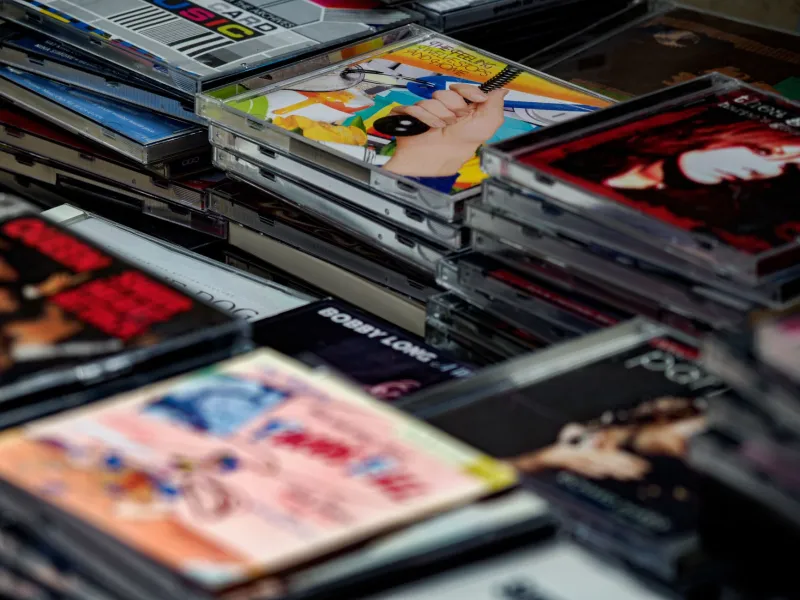
There's a CD sitting in a collector's climate-controlled storage unit in Portland, Oregon that still smells faintly of bubblegum. Not the plastic-and-cardboard smell that most of us associate with cracking open a jewel case — actual bubblegum. The kind that hits you in the back of the throat and drags you straight back to childhood. The owner, a collector named Marcus who has been hunting down unusual pressings since the late nineties, says he takes it out maybe twice a year just to remind himself it's real.
"People don't believe me when I describe it," he says. "They think I'm exaggerating. Then they smell it and they go completely quiet."
Welcome to one of the most overlooked corners of CD collecting: the short, strange, and genuinely fascinating era when packaging designers decided that sight alone wasn't doing enough work.
When Labels Started Thinking Outside the Case
The mid-nineties were a weird and wonderful time for album packaging. CD sales were exploding, labels were flush with cash, and the format's smaller canvas compared to vinyl had already pushed designers to get creative with inserts, booklets, and unconventional case formats. But a handful of artists and labels took things in a direction nobody had really anticipated — they started messing with your other senses.
Scratch-and-sniff technology had been around since the 1970s, originally developed by 3M and famously used on novelty stickers. By the time CDs were dominating the market, the technology was cheap enough that a forward-thinking art director could pitch it as a packaging element without giving the finance department a heart attack. Textured printing — embossing, spot UV coatings, soft-touch laminates, even flocked velvet surfaces — followed similar logic. The cost premium was real, but for an artist with a strong visual identity and a label willing to invest in the physical product, the payoff in fan reaction was enormous.
The artists who went this route tended to fall into a few camps. Pop acts aimed at younger audiences leaned into scratch-and-sniff because it mapped onto the playful, candy-colored aesthetic they were already working with. Alternative and indie artists used texture as a way to signal craft and intentionality — a soft-touch matte cover communicated something different than a glossy standard jewel case. And a smaller, weirder group of experimental artists used scent almost conceptually, treating it as an extension of the music's themes.
The Releases Collectors Are Still Hunting
Ask around in serious collecting circles and a few names come up repeatedly. Several teen pop releases from the late nineties included scratch-and-sniff panels on their inserts — fruit scents, candy scents, the occasional floral note. These were largely treated as throwaway gimmicks at the time, which means most copies got opened, scratched repeatedly until the scent faded, and eventually discarded. Finding one today where the scent is still detectable is genuinely difficult.
On the more artistically ambitious end, some limited-edition pressings from independent labels experimented with embossed covers that had an almost sculptural quality — you could feel the letterforms and imagery under your fingertips even with your eyes closed. A few releases used flocked printing, giving the cover a velvety texture that felt completely unlike anything else in a CD rack.
Collector Diane, based in Austin, has spent years specifically targeting these sensory variants. "The challenge is that condition matters in a completely different way," she explains. "With a regular CD, you're looking at the booklet, the disc, the tray card. With these, you're also asking: does it still smell? Is the texture intact? Has the embossing been flattened from being stored under something heavy? It adds a whole new dimension to grading."
She's not wrong. The standard collector's grading vocabulary — mint, near mint, very good plus — doesn't quite account for olfactory degradation. The community has been improvising its own language for years.
Why the Experiment Died
The honest answer is that it came down to money and logistics, as most things in the music industry eventually do. Specialty printing processes cost more, required longer lead times, and created headaches for large-scale manufacturing. As the late nineties CD boom gave way to the early 2000s downturn — accelerated by digital piracy and then finished off by streaming — labels started cutting every non-essential expense they could find. Embossed covers and scratch-and-sniff inserts were easy targets.
There was also a practical problem with scented packaging specifically: the chemicals used to encapsulate fragrance in scratch-and-sniff applications don't last forever. Even a well-preserved copy loses potency over time. For a label investing in a sensory gimmick, there was something uncomfortable about the idea that the experience had a built-in expiration date.
And then there was the retail environment. CD racks and display cases weren't designed for anything unusual. A textured cover that looked incredible in isolation could get dinged up during shipping or while sitting in a store bin. The gap between the designer's vision and what actually reached the consumer was sometimes brutal.
The Case for a Comeback
Here's where things get interesting. The music industry in 2024 is deeply invested in the idea of the album as an experience — something you participate in rather than just consume. Artists are bundling physical releases with exclusive content, fan events, and collectible variants specifically designed to reward the people who still buy physical media. Vinyl's resurgence has already proven that there's a real market for formats that offer something streaming simply cannot.
Sensory packaging fits that story almost perfectly. A scratch-and-sniff insert isn't just a novelty — it's a memory anchor, a way to make an album physically unforgettable in a way that a Spotify playlist never could be. Textured covers reward the act of holding the object. They make the CD feel like it deserves to be held.
Some smaller labels and artists have already started experimenting again. Limited runs with specialty printing, unusual materials, even a few releases that have played with scent in more sophisticated ways than the bubblegum-and-fruit palette of the nineties. The technology has improved significantly — modern microencapsulation techniques can produce scents that are more complex and longer-lasting than what was available thirty years ago.
Marcus, still guarding his bubblegum-scented CD in Portland, thinks the moment is close. "Everything that made these special the first time around is still true," he says. "They're surprising. They make you stop. They make you remember. That's exactly what physical music needs to be doing right now."
What This Means for Collectors Today
If you're not already paying attention to sensory variants, it might be time to start. Pricing on these pieces hasn't fully caught up to their rarity — many collectors don't even know to look for them, which means patient hunters can still find genuinely unusual copies at prices that will look absurd in five years.
The key is knowing what to look for. Check original release notes and fan forums for any mention of specialty packaging. Look for inserts with small printed panels that might indicate a scratch-and-sniff element. Run your fingers across covers that seem slightly unusual in texture. And when you find something that still has its scent intact, treat it accordingly — store it away from heat, away from other strong smells, and away from direct light.
These aren't just curiosities. They're evidence of a moment when the people making physical music decided that two senses weren't enough — and for a few years, they were absolutely right.