Your Nose Knows: The Science Behind Why Opening a CD Still Hits Different
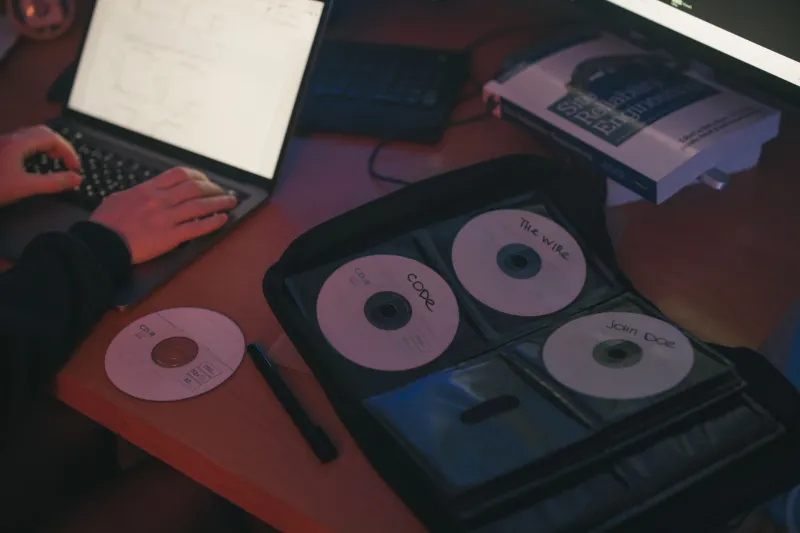
You've done it. You pull a CD from the back of a closet, or maybe you score one at a flea market, and before you even look at the artwork, you flip it open and take a breath. Something shifts. Suddenly you're sixteen again, sitting cross-legged on a carpet, reading every line of liner notes like they were scripture. That smell — that specific, impossible-to-describe cocktail of molded polycarbonate, printed cardstock, and something vaguely chemical underneath — just dragged you back twenty years without asking permission.
This isn't just sentimentality. It's neuroscience. And the more researchers dig into it, the more that little plastic case starts to look like one of the most emotionally sophisticated objects in your home.
Why Smell Is the Memory Sense
Of all the human senses, smell has the most direct line to the brain's emotional core. Dr. Rachel Herz, a cognitive neuroscientist at Brown University who has spent years studying olfactory memory, puts it plainly: the olfactory bulb connects directly to the amygdala and hippocampus — the brain regions most tightly associated with emotion and long-term memory. Every other sense gets routed through a kind of neurological relay station first. Smell doesn't. It goes straight in.
This is why a whiff of sunscreen can drop you into a summer from childhood faster than a photograph can, and why that particular scent of a CD booklet — slightly waxy, faintly acidic from the printing inks, with that underlying plastic undertone — can carry the emotional weight of an entire era. "Odor-evoked memories tend to be older, more emotional, and more rarely thought about than memories triggered by other cues," Herz has noted in her research. In other words, they hit harder precisely because you've been ignoring them.
For collectors, this isn't an abstract concept. It's Tuesday afternoon.
What's Actually in That Smell?
So what exactly are you inhaling when you open a CD case? The scent is a composite. The jewel case itself is injection-molded polystyrene or polypropylene, which off-gases faintly over time — particularly in warmer conditions. The booklet paper carries residue from the inks used in offset printing, typically petroleum-based compounds that break down slowly and release volatile organic compounds. The glue used to bind multi-page inserts adds another layer. And if the disc itself has been sitting in a warm attic for a decade, the polycarbonate substrate and lacquer coating contribute their own signature notes.
None of these things smell good in isolation. Together, in the right ratio, they apparently smell like your whole adolescence.
Long-time collector Marcus Webb, based in Nashville, describes the scent of a specific early 2000s major-label release as "almost like a library mixed with a hardware store, but in a good way." He admits he bought a second copy of one album purely because his original had lost its smell. "The music is on my phone. I bought the CD for the smell. I know how that sounds."
It sounds, actually, like exactly the kind of thing researchers in music psychology have been documenting for years.
The Multi-Sensory Gap Streaming Left Behind
Dr. Daniel Levitin, a neuroscientist and musician whose work on music cognition has reached mainstream audiences, has argued extensively that music listening is not purely auditory. The context in which you encounter music — the physical ritual surrounding it — becomes encoded alongside the music itself. When you strip away the ritual, you don't just lose packaging. You lose part of the memory architecture.
Streaming is extraordinarily convenient and genuinely lossless in some technical respects. What it cannot do is smell like anything. It cannot have a specific weight in your hand. It cannot require you to unfold a lyric sheet and hold it under a lamp to read the small print. These aren't flaws in the streaming experience; they're simply absences. But for a generation of listeners whose most formative musical moments happened in the physical world, those absences are felt.
"There's a reason people describe music from their youth as sounding better, even when it technically isn't," says music psychologist Dr. Aimee Bhatt, who teaches at the University of Michigan. "The original encounter was multi-sensory. The smell, the texture, the visual design — all of that got bundled into the memory. When you just hit play on a streaming service, you're only activating part of the original experience."
Why Gen Z Is Catching the Scent
Here's the genuinely interesting wrinkle: the CD nostalgia wave isn't limited to people who grew up with the format. Collectors in their early twenties — who were barely walking when the CD market peaked — are reporting the same olfactory pull. They didn't live through the CD era, but they're experiencing its sensory signature for the first time and finding it powerfully evocative anyway.
Part of this is cultural transmission. Older siblings, parents, thrift store finds — the physical artifacts of the CD era are everywhere, and encountering them for the first time still triggers a response. But Dr. Bhatt suggests something else may be at work. "For a generation that grew up with digital-everything, physical media offers a kind of sensory novelty that their own nostalgia-to-come will eventually be built around. They're creating those memories now."
This tracks with what's happening in collector communities online. TikTok and Instagram are full of younger users cracking open used CD cases on camera, and the comments sections are full of people describing the smell in vivid, almost poetic terms. Nobody talks about the smell of their Spotify queue.
The Irreplaceable Artifact
For the collectors at the heart of the physical media revival, all of this validates something they've been saying for years without quite having the vocabulary for it. The CD was never just a delivery mechanism for audio. It was a sensory object — a thing you held, smelled, read, and examined. The music was the point, but the packaging was the experience.
There's no streaming equivalent to sitting with a new album, opening the case for the first time, and breathing it in before you've heard a single note. That moment is its own thing. And apparently, your brain agrees — it files that moment in the most emotionally durable storage it has.
So the next time someone asks why you're still buying CDs in the age of unlimited streaming, you can tell them you're not just collecting music. You're collecting memories. And your nose has been doing the archiving all along.