Pixel Perfect: The Collectors Digitizing Every Inch of Their CD Libraries—And the Copyright Questions Nobody Wants to Answer
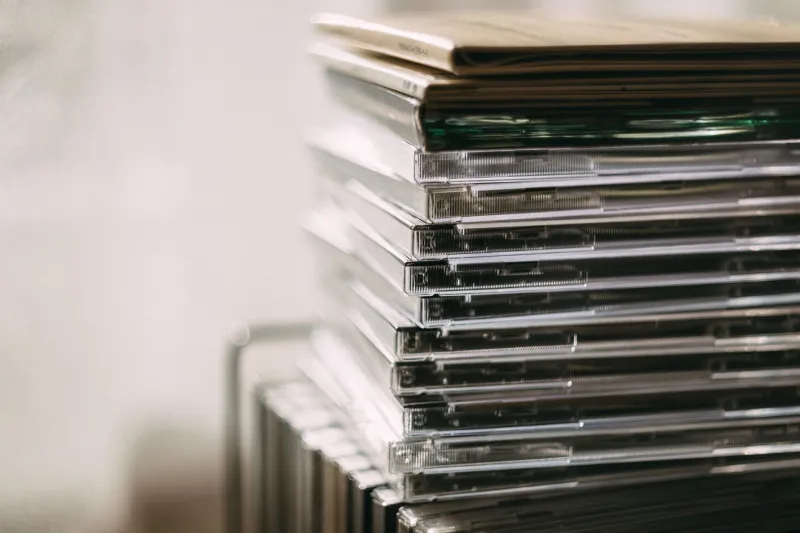
Somewhere in suburban Columbus, Ohio, a guy named Marcus has a problem most people would envy. He owns somewhere north of 4,000 CDs—everything from early-pressing Nirvana discs to import editions of Japanese city pop albums that cost him more than a car payment to track down. His collection is insured, climate-controlled, and organized with a precision that borders on clinical. But Marcus, who asked us to use only his first name, isn't content just owning the physical objects. He wants to preserve them.
So for the past three years, he's been scanning every piece of paper that comes out of every jewel case he owns. Front panels. Back trays. Booklets, page by page, at 1200 dots per inch. The resulting files are enormous. His archive currently takes up just under four terabytes of storage across two redundant external drives and a cloud backup. He calls it his "insurance policy."
"These things degrade," he says. "Booklets yellow. Ink fades. Jewel cases crack and scratch up the inserts. I've watched it happen to stuff I bought new in 1997. Scanning isn't about replacing the physical object—it's about making sure the artwork survives even if the packaging doesn't."
Marcus isn't alone. Across collector forums, Discord servers, and subreddits dedicated to physical media, a growing community of audiophiles and music historians are doing exactly what he does—building meticulous personal digital libraries of CD artwork that rival anything a professional archive might produce.
The Gear Behind the Obsession
This isn't point-and-shoot photography with a smartphone. The collectors doing serious archival work are running dedicated flatbed scanners—brands like Epson and Canon dominate the conversation—capable of capturing images at resolutions far beyond what the human eye can distinguish at normal viewing distances. The Epson Perfection V600, a longtime community favorite, regularly comes up in forum discussions as a sweet spot between cost and quality.
The workflow these collectors describe is methodical almost to a fault. Booklets get disassembled carefully, sometimes with light heat applied to loosen binding glue on older pressings. Each page is scanned individually, color-calibrated against a reference card, and then cleaned up in software like Adobe Photoshop or the free alternative GIMP. Final files are saved in lossless formats—TIFF being the gold standard—before compressed JPEGs are made for everyday browsing.
Some collectors go further still. Dedicated communities have formed around scanning obi strips, the paper bands that wrap Japanese import CDs and are notoriously fragile. Others focus on box sets, capturing not just the booklets but the structural design of the packaging itself. A few obsessives have begun experimenting with photogrammetry—the same technology used in video game development—to create three-dimensional digital models of particularly sculptural packaging.
"The goal is fidelity," says one forum moderator who goes by the handle Spindle_Ghost and has been coordinating community scanning projects for about five years. "If someone's grandkid finds this archive in forty years, they should be able to understand exactly what holding that original object felt like."
Where the Law Gets Murky
Here's where things get complicated—and where the music industry's lawyers start paying closer attention.
Under US copyright law, the concept of "fair use" provides some breathing room for personal use and preservation. But fair use isn't a blanket permission slip. It's a balancing test, and courts weigh factors like the purpose of the use, the nature of the copyrighted work, how much of it was reproduced, and the potential market impact. Scanning a CD booklet for strictly personal archival use sits in genuinely ambiguous territory.
"The honest answer is that nobody has litigated this specific scenario," says one intellectual property attorney we spoke with, who works with independent musicians and labels and asked not to be named. "Personal archiving of something you legally own has traditionally been treated with some tolerance, but the moment those scans leave your hard drive and end up somewhere public, you're in a very different conversation."
That distinction—private archive versus public sharing—is where the collector community draws its own internal lines, sometimes fiercely. The forums where these projects live have explicit rules against distributing scans of commercially available artwork. The stated mission is preservation, not piracy. But enforcement is informal, and the line between a private Discord sharing group and a public file dump can be thin.
The Digital Millennium Copyright Act adds another layer. While it carves out some space for libraries and archives to make preservation copies under specific conditions, those provisions were written with institutions in mind—not a guy in Columbus with a flatbed scanner and a four-terabyte hard drive. Individual collectors don't qualify for the same protections a university library might claim.
What the Labels Think (When They Think About It at All)
For the most part, major labels haven't made collector scanning a public enforcement priority. The music industry's legal energy over the past two decades has focused on streaming royalties, unlicensed distribution platforms, and AI training data—not someone archiving their own jewel case inserts. But that tolerance isn't the same as permission, and it can evaporate quickly if the landscape shifts.
Smaller labels and independent artists occasionally push back when their artwork turns up on public databases without authorization. A few boutique labels we contacted for this piece declined to comment on record but expressed discomfort with the idea of their packaging being reproduced and shared, even in preservation contexts, without any agreement in place.
The irony is that many of these same labels have done a poor job preserving their own visual assets. Artwork files get lost during label acquisitions. Design studios close. Hard drives fail. In some documented cases, collector scans have actually served as the only surviving high-resolution record of a release's original packaging—information the labels themselves no longer have.
The Deeper Question
There's something worth sitting with here that goes beyond the legal mechanics. The people doing this work aren't pirates in any meaningful sense of the word. They're closer to the amateur historians who photograph gravestones for genealogy databases or the volunteers who digitize local newspaper archives before the newsprint crumbles entirely. They're motivated by love for the object and anxiety about its disappearance.
CD packaging is already a casualty of the streaming era in slow motion. Print runs shrink. Reissues cut corners. Deluxe editions get announced and canceled. The physical artifact that once anchored a musical experience—the thing you held in your hands while the music played—is increasingly treated as optional, even by the artists and labels who make it.
Collectors scanning their libraries are, in their own obsessive way, pushing back against that. Whether the law eventually decides to recognize what they're doing as legitimate preservation or treat it as infringement may say less about copyright doctrine than it does about how much we actually value the visual history of recorded music.
Marcus, for his part, isn't losing sleep over it. His archive grows by a few dozen scans every week. His backups run automatically every night.
"I bought these records," he says. "I'm not selling the scans. I'm not posting them anywhere. I'm just making sure they don't disappear." He pauses. "If that's illegal, somebody's going to have to explain that to me very slowly."