Crack It Open: Why Gen Z Is Falling Hard for the Ritual of the CD Unbox
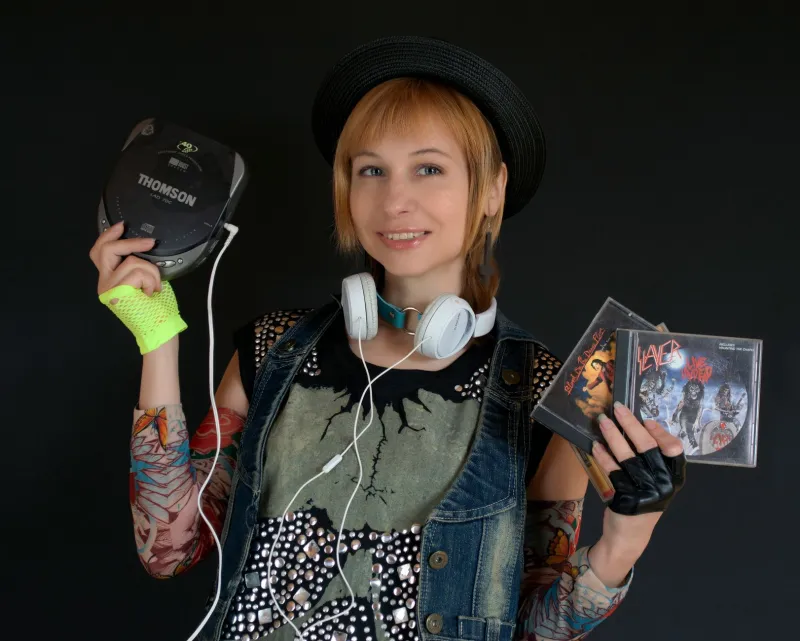
There's a specific sound that a generation of music fans grew up hearing and then mostly forgot about. That soft plastic crack when you pop a jewel case open for the first time. The slight resistance of a shrink-wrap seal giving way. The dry whisper of a lyric booklet sliding out from behind the tray. For anyone who bought CDs through the '90s and 2000s, those sensory details are baked deep into memory. For a lot of Gen Z listeners, they're something entirely new—and apparently, something they cannot get enough of.
Unboxing videos have been a YouTube staple since the late 2000s, but the specific sub-genre of CD unboxing has seen a quiet, steady surge over the last couple of years. Search the format on TikTok or YouTube Shorts and you'll find thousands of videos racking up serious view counts—not just for new releases with elaborate K-pop packaging, but for secondhand jewel cases pulled from Goodwill bins and thrift store racks. Creators crack open decades-old copies of Alanis Morissette, Radiohead, and Destiny's Child with the same reverent energy usually reserved for limited-edition sneaker drops. The comment sections are full of teenagers asking questions like, "Wait, there are lyrics in there?" and "Why does this feel more exciting than listening on Spotify?"
That second question is the one worth sitting with.
The Streaming Gap Nobody Talked About
Streaming solved a real problem. It made access frictionless, catalogs infinite, and discovery effortless. But in solving the access problem, it quietly erased something that nobody thought to put on the feature list: the experience of arrival. When you stream an album, it simply begins. There's no threshold to cross, no object to handle, no sequence of small physical events that build toward the music itself. You press play and you're already there.
What CD unboxing culture is revealing—pretty loudly, at this point—is that a meaningful chunk of younger listeners actually wants that threshold back. They want the build-up. The booklet. The moment of turning to page three and finding a photo you weren't expecting. The realization that the lyrics you've been mishearing for months are printed right there in black and white.
This isn't nostalgia, at least not in the traditional sense. You can't be nostalgic for something you never experienced. What Gen Z is expressing looks more like sensory curiosity—a genuine appetite for consuming music in a way that requires their hands, their eyes, and a little bit of patience.
ASMR and the Jewel Case's Unlikely Second Life
The overlap between CD unboxing and ASMR content is where things get genuinely interesting. ASMR creators have been mining the CD format for years now, and the sounds of the format turn out to be remarkably well-suited to the genre. The click of a case hinge. The crinkle of a paper insert. The soft thud of a disc settling back into its tray. These are small, precise, repeatable sounds—exactly the kind that ASMR audiences seek out.
But there's something beyond pure audio satisfaction happening in these videos. Creators who do CD unboxing ASMR tend to linger. They'll spend two or three minutes just examining the front cover before the case even opens. They'll slowly fan through a booklet, pausing on each spread. They'll read liner note credits out loud—producers, engineers, the occasional thank-you to a high school art teacher. It's deliberate in a way that streaming culture almost never encourages, and audiences are clearly responding to the pace as much as the content.
For a format that the music industry spent most of the 2010s writing off as dead, the jewel case is having a genuinely strange and compelling cultural moment.
The Booklet Is the Hidden Star
Ask any collector what separates a great CD from a forgettable one and they'll almost always mention the booklet first. And this is exactly the element that seems to be landing hardest with Gen Z unboxers. The booklet is where the album's visual identity fully unfolds—cover art extended across multiple spreads, photographs from recording sessions, handwritten notes, art direction choices that took someone real time and creative energy to make.
For listeners who've only ever known an album as a grid of tracks on a phone screen, the booklet is a revelation. It's evidence that someone cared deeply about every layer of the release, not just the audio. The music didn't just appear—it was made, designed, packaged, and delivered as a complete object.
That realization tends to change how people hear the music itself, which is something CD Cover Central has been saying for a while. The packaging isn't decoration. It's context. And context shapes perception in ways that are hard to fully quantify but easy to feel.
Thrift Stores as Discovery Machines
One detail that keeps coming up in Gen Z CD unboxing content is where the discs are coming from: thrift stores, Goodwill locations, library sales, and secondhand shops where jewel cases often sell for a dollar or less. This matters for a few reasons.
First, it makes the format genuinely accessible. You don't need to spend collector money to participate. A few dollars gets you a physical object with a booklet, artwork, and liner notes—a complete package that a streaming subscription can't replicate.
Second, it turns the discovery process into its own kind of adventure. There's no algorithm suggesting these purchases. You're flipping through a physical bin, reading spines, making snap judgments based on cover art alone. It's a form of browsing that streaming essentially eliminated, and younger listeners are rediscovering it as something that feels almost radical by comparison.
Third—and this is the part that should probably get more attention—it's sending people back to albums they might never have encountered otherwise. A Gen Z listener who picks up a used copy of Wilco's Yankee Hotel Foxtrot because the cover looked interesting isn't just buying a CD. They're potentially starting a relationship with an entire era of music, one physical object at a time.
What This Means for the Format Going Forward
It would be easy to frame all of this as a quirky internet trend that'll fade once the next format curiosity comes along. But the underlying impulse feels more durable than that. What Gen Z is gravitating toward in CD unboxing isn't really about CDs specifically—it's about intentionality. About consuming something slowly enough to actually notice it. About music existing as a physical, handled, experienced thing rather than an invisible stream.
The CD format, with its booklets and liner notes and that specific crack of a jewel case opening, happens to deliver that experience in an accessible, affordable, and frankly pretty satisfying way. Whether that sustains a full cultural revival or just carves out a devoted niche, the format is clearly doing something that streaming isn't. And for a generation that grew up with infinite music at zero friction, the appeal of a little deliberate resistance might be exactly the point.