Designed to Be Opened on Camera: How Album Packaging Became a Social Media Performance
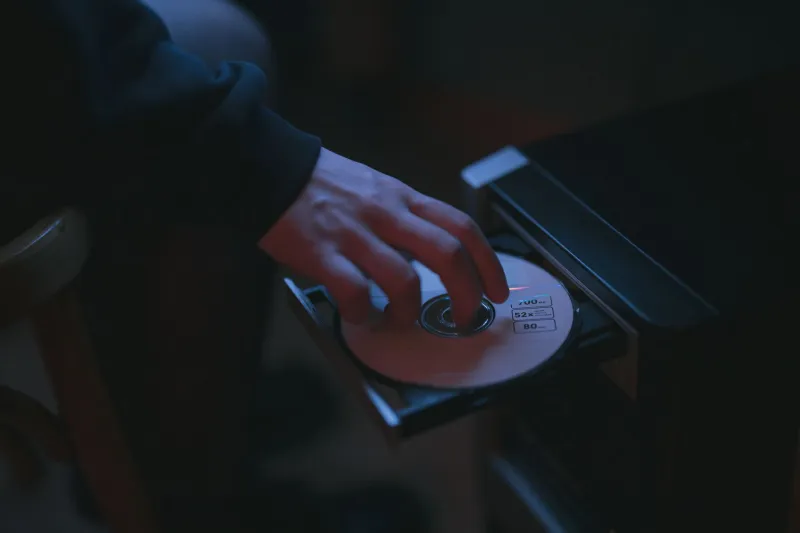
There's a moment in thousands of YouTube videos that follows the exact same script. A pair of hands — sometimes manicured, sometimes not — lifts a shrink-wrapped CD from a padded envelope. The camera zooms in. The plastic peels back with a satisfying crinkle. A gatefold unfolds to reveal a second image, or a folded lyric sheet, or a photocard tucked into a velvet sleeve. The person filming exhales audibly. Comments roll in within minutes: where did you get this, I need this immediately, the packaging alone is worth it.
This is the unboxing economy, and it has changed album cover design more quietly — and more completely — than almost anything else in the past decade.
The Camera Was Always in the Room
To be fair, physical music packaging has always carried a performative dimension. Pulling a new record from its sleeve was a ritual. Cracking open a CD jewel case in 1993 had its own tactile satisfaction. But the performance used to be private, or at most shared with whoever was standing in your bedroom. Now it's content. And content has requirements.
When Taylor Swift released multiple physical variants of The Tortured Poets Department — each with different cover images, different colored discs, and different bonus tracks — the Internet didn't just notice. It organized. Fans cataloged every variant. Collectors debated which pressing was most visually compelling on a shelf. Unboxing videos stacked up in the millions of views. The album's physical release became its own media event, running parallel to the music itself and generating engagement that no streaming announcement could replicate.
Swift is the most prominent example, but she's far from alone. Artists across pop, K-pop, indie, and even metal have started treating the physical package as a layered media object — something designed to reward documentation as much as ownership.
What Designers Are Actually Building Now
Talk to anyone working in album packaging right now and you'll hear a phrase that didn't exist in the industry fifteen years ago: unboxing moment. It refers to a deliberate design beat — a fold, a reveal, an unexpected texture — engineered to produce a reaction on camera.
Some of these elements are purely visual. Holographic foil that catches light differently at every angle. Embossed covers that create shadows when held under a lamp. Die-cut sleeves that reveal a second image underneath. Others are tactile: rough-textured board stock, wax-sealed envelopes, ribbon pulls on hardcover booklets. A few are genuinely surprising — photocards inserted at random so no two packages are identical, or QR codes hidden inside the spine that unlock exclusive content.
The goal, increasingly, is to give the person filming something to discover. A package that reveals everything at a glance is a package that dies in thirty seconds of footage. A package with layers, with secrets, with moments that reward slow exploration — that's a package that holds a camera's attention for five minutes and gets shared.
K-Pop Set the Template
It would be dishonest to talk about this phenomenon without crediting K-pop, which industrialized the collectible album format years before Western acts caught on. Groups like BTS, BLACKPINK, and TWICE have long shipped albums that function less like traditional music releases and more like fan merchandise sets — multiple cover versions, random photocards, pull-out booklets with dozens of pages of photography, and packaging so elaborate it borders on gift-box territory.
American collectors discovered these releases through YouTube, and the lesson wasn't subtle: physical packaging could generate excitement that the music alone couldn't. Labels noticed. So did artists.
The K-pop unboxing video format — methodical, close-up, narrated — migrated directly into how American fans document domestic releases. The vocabulary traveled with it. Collectors now talk about inclusions, variants, and photobook quality when discussing domestic CD releases the same way they'd discuss a Korean import.
The Collector Community Has Complicated Feelings About All of This
For longtime CD collectors — the people who've been archiving jewel cases and tracking down regional pressings since the nineties — the unboxing economy is a genuinely mixed development.
On one hand, it has injected serious money and mainstream attention into physical music formats that were being written off as obsolete. Record stores are stocking more CD variants. Labels are investing in packaging quality they abandoned during the cost-cutting years of the early 2000s. Younger buyers who grew up streaming are handling physical media for the first time and, often, getting hooked.
On the other hand, some of what's being sold as collectible packaging is designed more for a sixty-second video than for long-term ownership. Cardboard that photographs beautifully but warps after six months on a shelf. Inserts printed on paper so thin they crease if you breathe on them. Random photocard inclusions that encourage fans to buy multiple copies of the same album — a practice that critics call exploitative and fans call just how it works now.
The tension is real. Collector culture has always valued durability and authenticity. The unboxing economy values spectacle and shareability. Those aren't always the same thing.
When the Package Outlasts the Algorithm
Here's the part that gets interesting from an archival perspective: a lot of this packaging, despite being engineered for social media, is actually more physically ambitious than what labels were producing in the late CD era. The gatefolds are thicker. The printing is sharper. The inserts are more detailed. Whatever you think of the motivations behind it, the physical object itself is often genuinely impressive.
Which means that in twenty years, when someone is digging through a collection and pulls out a 2024 deluxe CD variant with its embossed cover and hand-numbered photocard, they're going to find something that holds up. The algorithm that drove its creation will be long dead. The TikTok video that went viral when it was unboxed will be inaccessible. But the object will still be there, doing what objects do — carrying its moment forward in physical form.
That's the quiet irony at the center of the unboxing economy. It creates packaging designed to be consumed as content, and in doing so accidentally produces artifacts worth preserving.
What 'Good' Packaging Means Now
The definition of great album art used to be almost entirely visual. Could the image stop you in a record store? Did it communicate something true about the music? Did it hold up under repeated examination?
Those questions still matter. But the rubric has expanded. Now great packaging also asks: does it reward being filmed? Does it have a moment that makes someone want to share it? Does it give a collector something to narrate?
For purists, that feels like a corruption of the form. For a younger generation of collectors building their first physical libraries, it's just the context they know. And honestly, from where we sit at CD Cover Central, both things can be true. Packaging can be designed for cameras and still be worth owning. The performance can be the point without the object losing its value.
The hands opening the package on camera will eventually put it on a shelf. And that's where it'll live — long after the view count stops climbing.