Pressing Matters: Inside the Shadowy World of Bootleg CD Art and Why Collectors Can't Get Enough
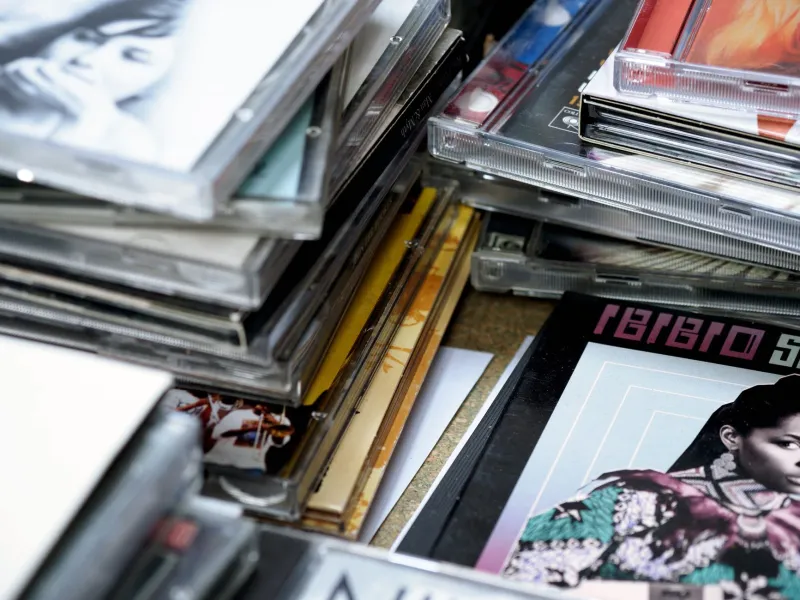
Walk into any serious record collector's home in America and you'll likely find a few items they won't immediately volunteer information about. Not because they're embarrassed, exactly — but because the conversation that follows tends to get complicated fast. These are the bootlegs: unauthorized pressings, reproduction sleeves, and counterfeit editions that exist in a legal and ethical gray zone that even the most seasoned collectors struggle to define cleanly.
And yet the market for them is thriving.
What Even Counts as a Bootleg?
Before we get into dollar figures and detective work, it's worth clarifying what we're actually talking about. In the CD world, "bootleg" gets used loosely to mean a few different things. There are outright counterfeits — copies made to deceive buyers into thinking they're purchasing an original pressing. Then there are unofficial live recordings pressed onto disc with custom-designed sleeves. And then there's a third category that blurs the line further: high-quality reproduction runs of albums that are simply impossible to find through legitimate channels.
That last category is where things get philosophically messy, and where some of the most passionate collector debates happen.
Take an album that was pressed in a run of 500 copies for a regional Japanese market in 1987 and never reissued. The original label folded. The artist hasn't seen royalties in decades. The only way to hear it physically — to hold the artwork, read the liner notes, experience the packaging as the creator intended — is to either spend $800 on a verified original or $45 on a reproduction someone made with obsessive care in their garage.
"I'm not hurting anyone," says Marcus, a 44-year-old collector from Portland who asked us not to use his last name. "The label is gone. The pressing plant is gone. I'm the one keeping this thing alive."
The Authentication Game
Whether you're trying to avoid fakes or specifically hunting them, authentication is the skill that separates the novice from the expert. And it's genuinely difficult — which is part of what makes this corner of collector culture so compelling.
The tells vary by era and region of pressing. For Japanese CDs from the late '80s and early '90s, collectors look at the matrix etchings stamped into the disc's inner ring. Originals have specific alphanumeric codes pressed by specific plants, and those codes are catalogued obsessively in online databases maintained by volunteers who treat this like a forensic science.
Paper stock is another giveaway. Legitimate pressings from major Japanese labels used a specific weight and finish on their booklets that's notoriously hard to reproduce. Bootleggers who cut corners on materials can fool a casual buyer but not someone who's handled a hundred originals.
Then there's the barcode — or the deliberate absence of one. Some reproduction makers actually remove or alter barcodes specifically to signal that they're not trying to pass the item off as genuine, creating what some in the community call "honest fakes." It sounds like a contradiction, but it's a real distinction that affects both pricing and community reception.
Dave Hendricks, who runs a small authentication consulting service out of Nashville and has been collecting since the early '90s, puts it plainly: "The fakes I respect are the ones where someone put real work into the artwork. You can tell they actually cared. The ones I have a problem with are the cheap scams trying to rip off a new buyer who doesn't know better."
Why Some Bootlegs Are Worth More Than Originals
Here's the counterintuitive part: certain bootlegs have developed their own collector value entirely independent of the originals they're based on.
A well-documented unofficial pressing of a legendary live show — say, a 1975 concert recording that circulated on tape for decades before someone finally designed proper packaging for it — can sell for $200 or more in collector circles. Not because it's mistaken for something official, but because the object itself has become historically significant. It represents a moment in collector culture, a specific community's effort to preserve something that would otherwise exist only as a degraded cassette dub.
There's also the phenomenon of the "upgrade bootleg" — a reproduction that actually improves on the original's presentation. Some obsessive fans have recreated album packaging using higher-resolution artwork scans, corrected color profiles, and better printing than the original label used. These aren't trying to deceive anyone. They're more like restoration projects, and within certain communities, they're celebrated as such.
The Ethical Weight
None of this exists without tension, and it would be dishonest to pretend otherwise.
Artists — especially independent ones — have a legitimate interest in controlling how their work is packaged and sold. When a bootlegger reproduces an album without authorization, even one that's genuinely out of print, they're making decisions about an artist's creative legacy without consent. Some artists find this flattering. Others find it infuriating.
The community itself is divided. Forums dedicated to CD collecting will have heated threads debating whether reproducing a legitimately unavailable album is preservation or exploitation. The consensus, if there is one, leans toward a kind of pragmatic tolerance: reproductions of truly inaccessible material occupy a different moral space than counterfeits designed to rip off buyers or deprive active artists of income.
But that line is easier to draw in theory than in practice.
What Comes Next
The bootleg economy isn't shrinking. If anything, the explosion of interest in physical media among younger listeners — people who grew up streaming and are now discovering the tactile pleasure of holding an album — has introduced a new wave of buyers who are less concerned with provenance and more interested in the object itself.
For the serious collector, that's both exciting and alarming. More demand means more fakes entering the market, but it also means more eyes on the history and craft of album packaging. More people learning to read a matrix code. More people who understand why the weight of a booklet page matters.
At CD Cover Central, we've always believed that album art is worth preserving — in all its complicated, contested, gloriously imperfect forms. The bootleg economy, for better or worse, is part of that story.