Before You Hit Play: How Album Packaging Quietly Rewired the Music Inside
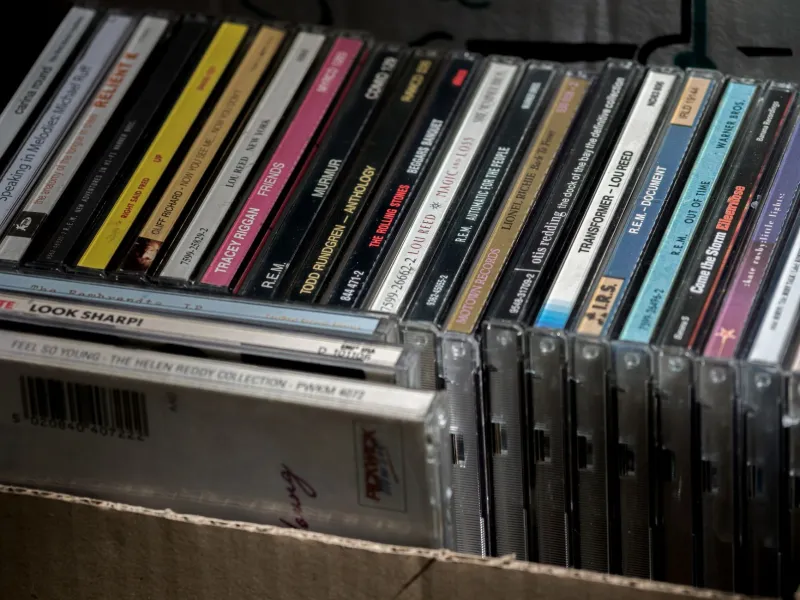
There's a moment every serious collector knows. You slide a CD out of its jewel case, unfold the booklet, and something shifts — the music you're about to hear already feels different. That's not nostalgia playing tricks. For decades, the physical experience of holding an album has had a measurable, documented influence on the creative decisions that went into making it. The packaging wasn't just decoration. It was a collaborator.
The Cover as Creative Brief
Ask any graphic designer who worked closely with a band during the CD era and they'll tell you the same thing: the conversation about artwork almost always bled into conversations about sound. When Storm Thorgerson's design firm Hipgnosis was producing visuals for Pink Floyd, the discussions weren't limited to color palettes and photography concepts. The imagery and the music were developed in parallel, each pushing the other into stranger, more ambitious territory.
That kind of creative cross-pollination happened constantly, even if it wasn't always this explicit. A band deciding their record should feel "cold and industrial" would bring that same language to their producer. A sleeve concept built around fractured, overlapping photographs might quietly encourage an artist to experiment with layered, non-linear song structures. The visual world of an album set a tone that musicians then felt obligated — or inspired — to inhabit.
Designer and longtime CD booklet contributor Aimee Lourdes, who spent years working with mid-size American indie labels through the late '90s and early 2000s, put it plainly: "More than once, I handed over a rough layout and the artist came back the next week saying they'd scrapped two songs because they didn't fit the feeling anymore. The art became the filter."
Gatefold Logic and the Architecture of Listening
The gatefold format — that double-panel spread that opens like a book — did something specific to how records were consumed. It demanded attention. You couldn't passively interact with a gatefold. You had to open it, examine it, sit with it. And that physical ritual created an expectation of depth.
Bands and labels weren't oblivious to this. When an album was going to live inside a gatefold, artists often felt pressure to justify that real estate with music that warranted the same kind of sustained attention. Side-long compositions, conceptually unified track sequences, records that built toward something — these weren't just artistic choices. They were responses to a format that signaled to the listener: this is going to take a minute, and that's the point.
The CD era complicated this dynamic in interesting ways. Jewel cases stripped away some of that physical drama, but the multi-page booklet introduced a new kind of storytelling space. Bands like Radiohead and Nine Inch Nails used their packaging as a secondary text — images, lyrics, and design choices that recontextualized the music and, in some cases, changed how fans interpreted specific songs entirely.
When the Art Came First
Sometimes the causality ran completely backward. There are documented cases where album artwork was essentially finished before the music was written, and the band then shaped their record around the visual identity they'd already committed to.
The most compelling examples often involve concept albums, where a narrative thread runs through both the packaging and the tracklist. But it happened on more straightforward records too. A striking photograph chosen for a cover could lock in a mood that the band then chased in the studio — warmer, grittier, more melancholic — because the image had already told the world what kind of record this was going to be.
For collectors, this history adds a layer of meaning to every physical copy they own. The CD sitting in your hands isn't just a delivery mechanism for audio files. It's a document of a creative process where sound and image were genuinely entangled.
The Tactile Dimension Nobody Talks About
There's something almost embarrassingly simple that gets overlooked in these conversations: the physical weight and texture of packaging affects how people listen. This isn't metaphor — it's psychology. When you're holding something, your brain registers it as significant. The ritual of opening a case, unfolding a booklet, reading along with lyrics while the music plays — all of it primes you for deeper engagement.
Musicians understood this intuitively, even when they couldn't articulate it. That's why so many artists fought their labels over packaging budgets. They knew that a cheap, flimsy presentation undercut the listening experience before the first track started. And they knew that an ambitious, carefully considered sleeve told the listener to pay attention.
Lourdes recalls a conversation with a drummer whose band was being pressured to cut corners on their booklet design: "He said, 'If people think we didn't care about the package, they'll assume we didn't care about the record.' He was right."
What Streaming Took Away (And What Collectors Are Holding Onto)
When music moved to streaming platforms, it didn't just lose physical format — it lost this entire feedback loop between visual identity and sonic creation. Playlist culture actively discourages the kind of sustained, album-length listening that gatefolds and elaborate booklets were designed to support. Single-song consumption means the contextual packaging that once shaped both the creation and reception of music is now largely irrelevant to how most people hear it.
For the collector community, this makes physical CDs and vinyl something more than nostalgic objects. They're artifacts of a creative process that no longer exists in quite the same form. When you pick up a well-preserved copy of a record with an ambitious booklet, you're holding evidence of a time when the container and the contents were designed to talk to each other.
That's the gatefold effect, really. Not just a format — a philosophy. The idea that what surrounds the music is part of the music. And for anyone who's ever sat down with an album, artwork spread open, and felt the record click into focus in a way it never quite does through earbuds on a phone, that philosophy doesn't feel outdated at all. It feels like something worth preserving.