10 Album Covers That Escaped the Music Store and Took Over American Culture
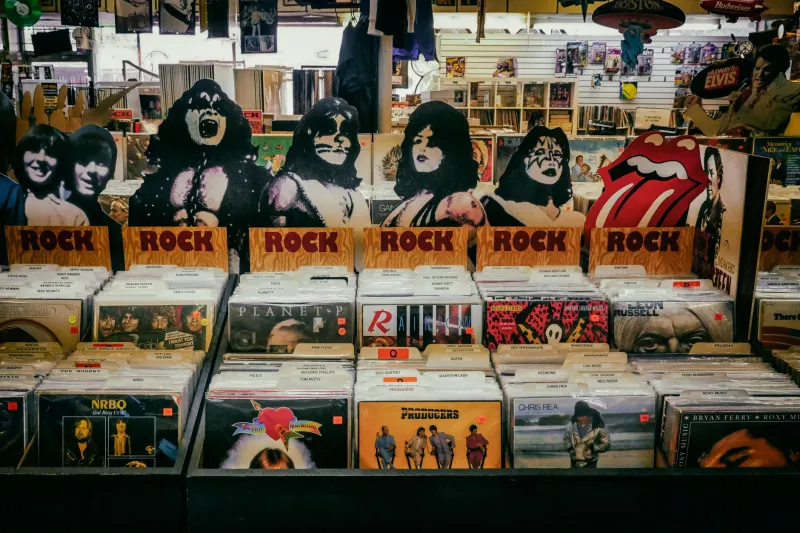
Most album covers do their job quietly. They sit on a shelf, catch the eye, maybe get glanced at while the record plays. Then there are the other ones — the covers that somehow break containment. The ones that end up on t-shirts and tattoos and gallery walls, that get referenced in TV shows decades after release, that even people who have never heard the album can identify on sight.
Those are the covers we're interested in here.
This isn't a ranking of the "greatest" album covers in some abstract critical sense. It's a look at ten specific sleeves that crossed over from music packaging into something larger — images that shaped how a generation dressed, decorated, thought about art, and understood themselves. The criteria is simple: did it escape the music store? Did it take on a life beyond the album?
For most of these, the answer is an unambiguous yes.
1. Nevermind — Nirvana (1991)
Few images in American pop culture have been analyzed, parodied, and replicated as relentlessly as Spencer Elden's underwater swim toward a dollar bill. The image arrived at exactly the right moment — the precise hinge point between the excess of the '80s and the studied indifference of the '90s — and it encoded something true about that cultural shift. The baby reaching for money while completely submerged felt like a metaphor for an entire generation before that generation had figured out what its metaphor was. Decades later, it remains one of the most instantly recognizable images in American music history, and its influence on graphic design, photography, and album art that followed is essentially incalculable.
2. Purple Rain — Prince (1984)
Prince on a motorcycle, bathed in purple light, staring directly into the camera with an expression that somehow communicates both vulnerability and total control. The Purple Rain cover wasn't just a great piece of design — it was a masterclass in personal mythology-building. Prince understood that an album cover was a chance to construct an image of yourself that would outlast any single song, and this image delivered completely. It showed up on bedroom walls across America throughout the mid-'80s, and it's still the definitive visual representation of one of music's most complex and compelling figures.
3. Born in the USA — Bruce Springsteen (1984)
Anna Leibovitz's close-cropped photograph of Springsteen's back pocket and a worn pair of jeans became one of the most debated images in American pop music — partly because of how spectacularly it was misread by people who took it as uncomplicated patriotism when the album was anything but. That tension between the image and the content is part of what makes it endure. Graphically, it's strikingly bold: almost no text, a flat red-and-white flag, a composition that feels more like a fashion photograph than a record sleeve. It influenced album cover design throughout the '80s and is still referenced in conversations about American identity and visual communication.
4. The Miseducation of Lauryn Hill (1998)
The photograph of Hill leaning against a graffiti-covered wall, looking thoughtful and unguarded, captured something about the late '90s moment in American music and culture that nothing else quite did. The cover felt personal in a way that wasn't common for major-label releases at that scale. It became iconic in dorm rooms and apartments across the country, particularly among young women who found something in Hill's expression — that mix of confidence and introspection — that felt genuinely representative. The album's cultural impact has only grown since its release, and the cover image has grown alongside it.
5. Illmatic — Nas (1994)
The childhood photograph of Nas superimposed over a view of the Queensbridge Houses is one of the most emotionally immediate album covers in hip-hop history. It communicates everything about the album's themes — memory, place, the weight of where you come from — without a single word of explanation. Design students still study it. It influenced a generation of hip-hop cover art that followed, pushing toward documentary photography and personal history rather than performed toughness. And it turned a housing project in Queens into a location that music fans across the country could identify on sight.
6. Rumours — Fleetwood Mac (1977)
Here's an interesting test of a cover's cultural reach: can someone who has never deliberately sought out the album still describe the image? For Rumours, the answer is almost certainly yes. Mick Fleetwood in velvet, Stevie Nicks in a gossamer outfit, the whole thing lit like a dream sequence — it's an image that has been absorbed into the collective American cultural memory through decades of exposure. Its visual language influenced fashion photography, music video aesthetics, and the broader visual culture of soft rock. It's been referenced and recreated so many times that the original has taken on a kind of mythological quality.
7. Thriller — Michael Jackson (1982)
The white suit. The tiger cub. The relaxed, almost playful pose. The Thriller cover works because it's deceptively simple — it doesn't announce itself as the packaging for what would become the best-selling album of all time. But that simplicity is part of its genius. The image became globally recognizable, appearing on everything from promotional materials to Halloween costumes to documentary posters. It's one of the few album covers that genuinely functions as a portrait — an image you'd recognize as a photograph of a person even if every album-related context were stripped away.
8. Appetite for Destruction — Guns N' Roses (1987)
The original Robert Williams painting was too controversial for most retailers, which means the cross-and-skulls replacement cover ended up becoming one of the most reproduced images in hard rock history. That skull cross has appeared on patches, pins, t-shirts, and tattoos for nearly four decades. It became the visual signature of a band that itself became a visual signature for a particular strain of American rock excess. For a generation of teenagers in the late '80s and early '90s, having this image on your jacket said something specific and unmistakable about who you were.
9. The College Dropout — Kanye West (2004)
Kanye's bear mascot, rendered in a cartoon style that felt genuinely unexpected in the hip-hop landscape of 2004, announced that something different was happening before a single track played. The cover's deliberate rejection of the visual conventions of mainstream rap — the posturing, the jewelry, the hard expressions — was itself a statement. It gave the album a visual identity that felt warm and slightly absurdist and completely self-assured all at once. The bear became one of the most recognizable mascots in contemporary music, and the cover's aesthetic influence on subsequent hip-hop and pop releases has been enormous.
10. Jagged Little Pill — Alanis Morissette (1995)
The black-and-white photograph of Morissette, hair wild, eyes intense, shot in a style that felt more like a candid snapshot than a professional promotional image, became the visual signature of a specific emotional register that dominated mid-'90s alternative culture. It showed up on walls in college dorms from coast to coast, and it communicated something about female anger and authenticity that felt genuinely new in mainstream pop music at the time. Almost thirty years later, it remains one of the defining images of '90s alternative, and its influence on how female artists present themselves visually has never entirely faded.
What connects all ten of these covers is that they did something beyond competent design. They created images that people wanted to live with — to put on their walls, carry on their jackets, reference in their own creative work. That's the highest standard an album cover can meet, and it's why, here at CD Cover Central, we never stop looking at them.